

October 2023 | BIPS Research Grant
Documenting the Stucco Collection and archives from Whitehouse’s Siraf Excavations at the British Museum
Summary of topic:
The proposed research aimed to conduct the first assessment of the stucco assemblage from the Siraf excavations (1966-1973) stored at the British Museum. The aim was to address, for the first time, the corpus of stucco fragments in relation to the original archaeological documentation, also kept at the British Museum. The material is indeed still largely unpublished, apart from a few fragments appeared, and only briefly discussed, in Whitehouse’s excavation reports.
Report:
The research yielded several interesting results while also highlighting potentials for future research activities. The study of the British Museum fragments revealed the existence of a rather diverse stucco production in terms of material composition, working techniques, and decorative solutions. Excavations in the mosque, market and residential areas revealed significant presence of miniaturistic-style stuccoes (c. 750-850 CE), closely related to the decorative and architectural horizon of the early-Abbasid Caliphate, with comparisons from Mesopotamia, Iran, and Central Asia (Fig. 1). Another type is represented by a well-crafted piece, likely dating to the second half of the 9th or early-10th century (Fig. 2), closely related the so-called ‘Bevelled Style’ stuccoes from Samarra, the Abbasid capital between 836 and 892. From this point onwards, the stucco production in Siraf seems to take a more ‘local’ turn, with an unusual penchant, compared to the rest of the contemporary Iranian world (10th–11th century), for a moulded technique. This production, featuring large panels decorated with geometric and/or vegetal patterns (Fig. 3), is mainly associated with Siraf residential areas.
It must be emphasised that the archival material, specifically the find-cards and excavation diaries, offers great potential for the continuation of this work. The corpus of stuccoes preserved at the BM is, in fact, only a very limited sample of the material found in the excavations led by Whitehouse. The find-cards reveal an extensive use of stucco in the city of Siraf that far exceeds what could be imagined from the published reports. The diaries, which contain detailed information on the excavation activities, offer the opportunity to contextualise the various productions within the different areas of the city. Given these premises and considering the evident potential, it is hoped that this work can be further developed in the future.
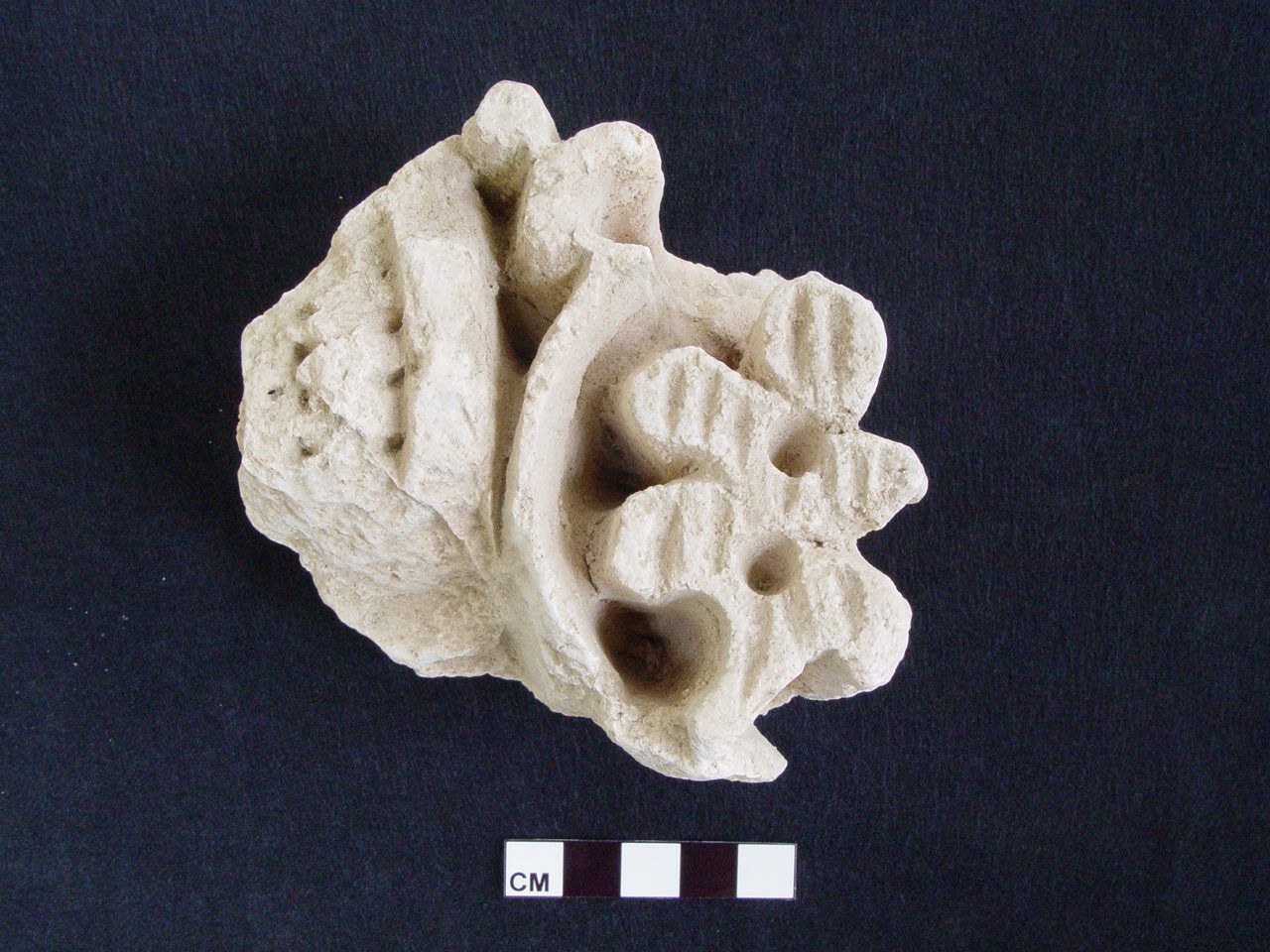
Fig. 1 Siraf, carved stucco fragment in the miniaturistic style, British Museum acc. no. 2007,6001.15214. © The Trustees of the British Museum. Shared under a Creative Commons Attribution-NonCommercial-ShareAlike 4.0 International (CC BY-NC-SA 4.0) licence.
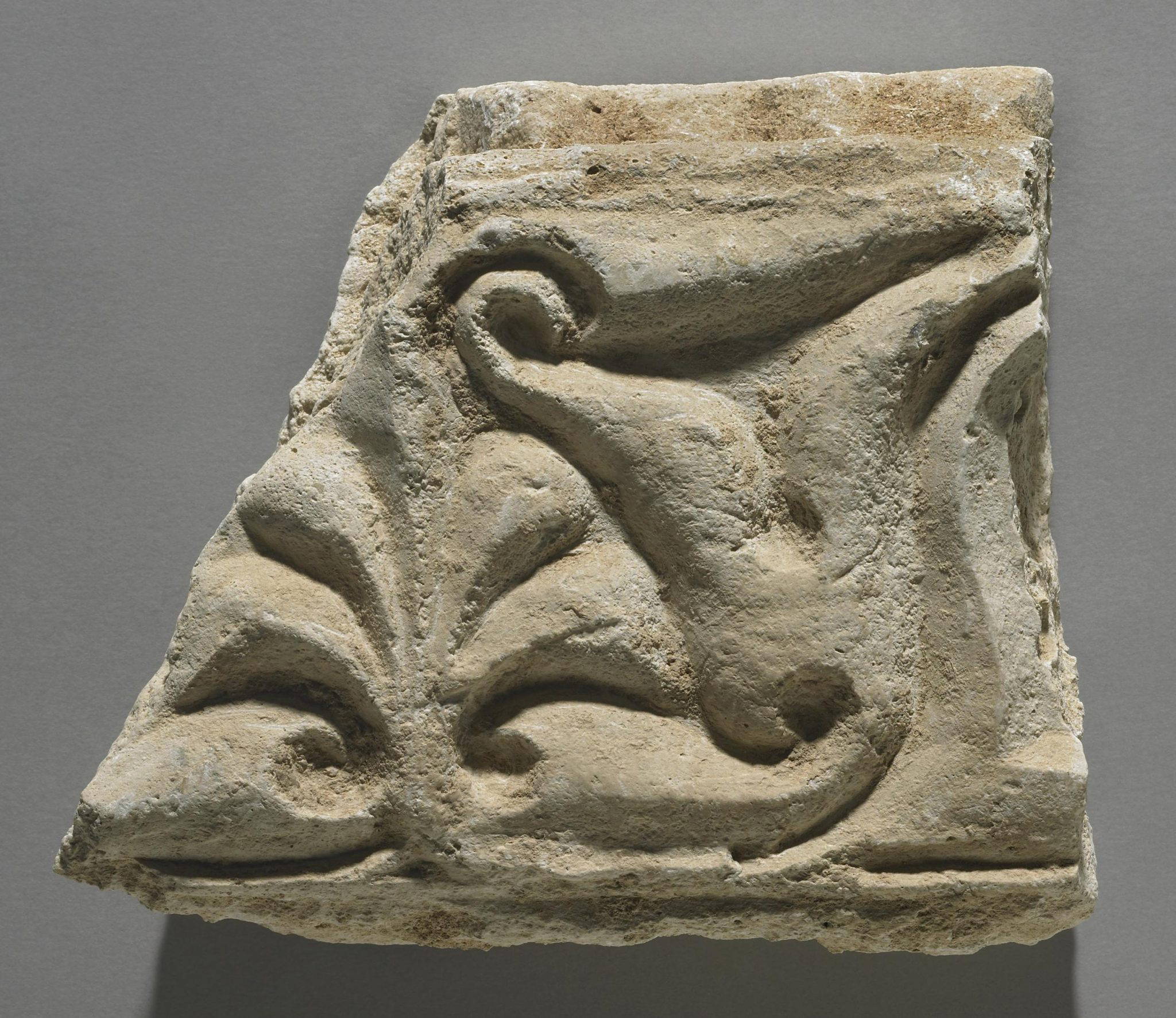
Fig. 2 Siraf, fragment of a carved stucco panel in the ‘Bevelled style’, British Museum acc. no. 2007,6001.15181. © The Trustees of the British Museum. Shared under a Creative Commons Attribution-NonCommercial-ShareAlike 4.0 International (CC BY-NC-SA 4.0) licence.
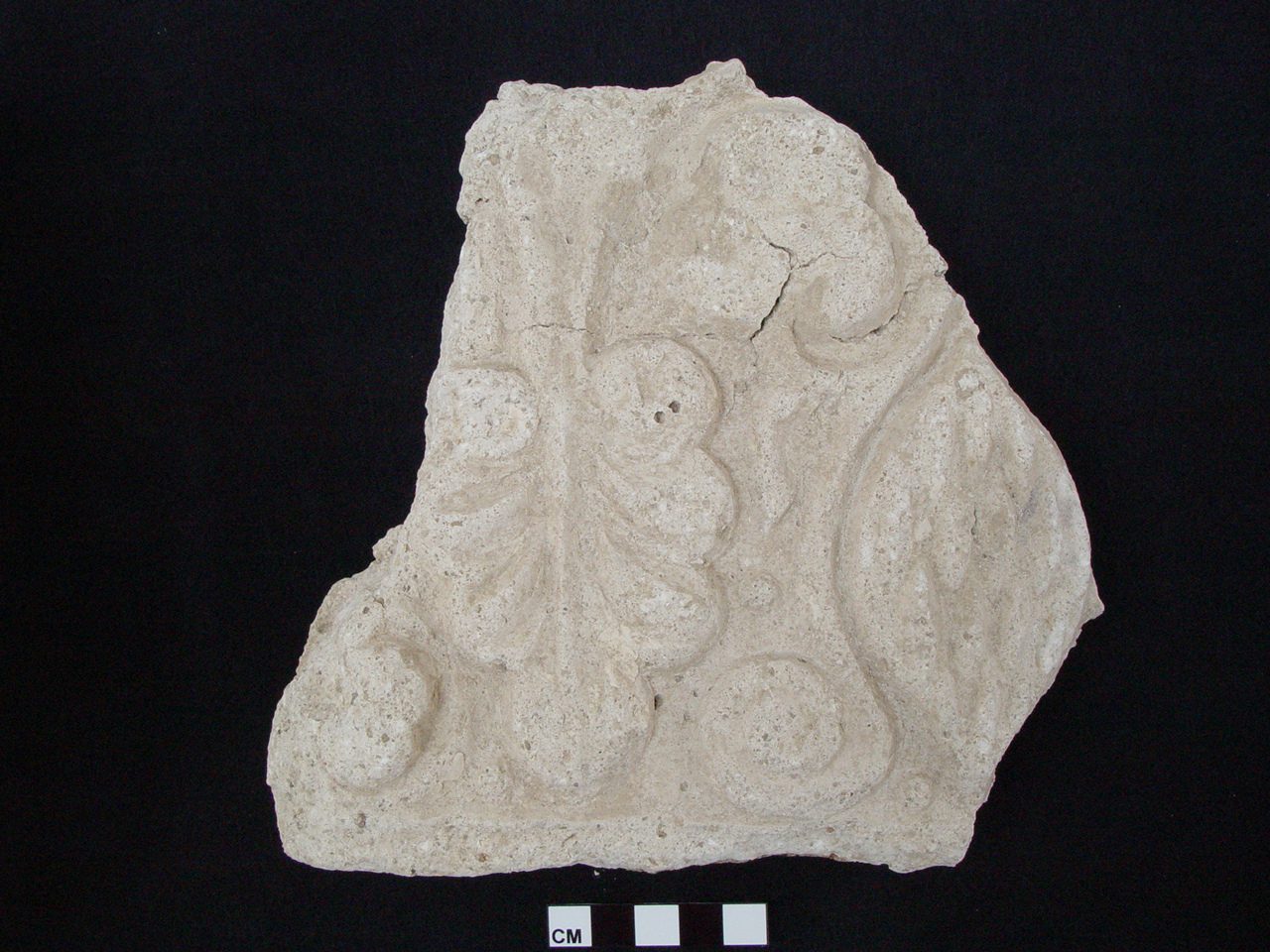
Fig. 3 Siraf, fragment of a moulded stucco panel, British Museum acc. no. 2007,6001.15133. © The Trustees of the British Museum. Shared under a Creative Commons Attribution-NonCommercial-ShareAlike 4.0 International (CC BY-NC-SA 4.0) licence.
Andrea Luigi Corsi is adjunct professor in Islamic Archaeology at Sapienza University of Rome and research associate at the University of York.