

The Legacy of Parsi Women in India
A Workshop at the F.D. Alpaiwalla Museum, Mumbai
27-28 November 2026. F.D. Alpaiwalla Museum, Mumbai, India
Convenors: Dr Sarah Stewart and Dr Vesta Sarkhosh Curtis
By the middle of the 19th century, Parsi women were beginning to take advantage of the opportunities afforded by formal education, becoming more visible in society and developing a public profile. Education based on the British model inevitably drew them into the English-speaking world of colonial rule. It also heralded a change in cultural and social customs – particularly in areas such as sport, music, and the adoption of western-style home design and furnishings. Although they were able to forge a new identity for themselves, combining traditional values with mainly western culture, this was a challenging transitional phase.
Parsi men were divided in their reaction to women’s education not least because it was a contributing factor to women becoming independent economically. By the early 1900s women had begun to work in professions such as medicine and law bringing them into contact with other Indians as well as institutions such as the Indian Women’s Council. Some became involved in Social Service, for example, the RTI (Ratan Tata Institute) for underprivileged women and women like Madame Bhikaiji Cama nursed victims of the Bombay Plague of 1896, succumbing to the disease and barely escaping death.
Working with women in civil institutions all over the country, and seeing the deprivations of the majority in society, was possibly the trigger that persuaded some Parsi women to question the freedoms they had acquired as the result of western education leading them to become active in the Nationalist movement.
This Workshop will discuss some of the key areas in which women participated in the development of Indian society and culture during the 19th and early 20th centuries and the impact this had on modern professional, domestic and devotional life. It will consider how the role of women grew in a society that was in transition. How did women become the agents for change during this period? What persuaded some Parsi women to lead the way out of the more repressive aspects of two prevailing systems: colonial rule and Parsi patriarchy?
Speakers from across India with a few from the UK, USA, and Hong Kong, will address the different areas in which Parsi women gained agency and prominence in the fields of law, education, medicine, literature, politics, theatre, media, and in domestic and devotional life.
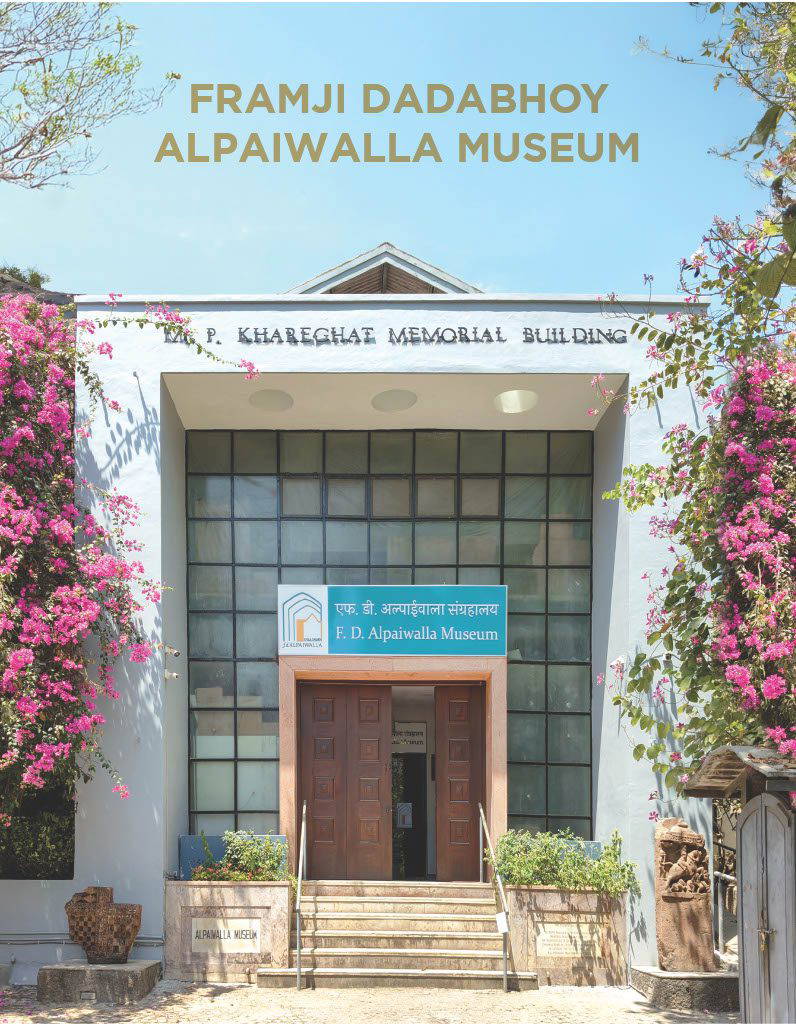
This event is organised by BIPS in partnership with the F.D. Alpaiwalla Museum (image courtesy: F.D. Alpaiwalla Museum, Mumbai. Photographer: Harshad Panchal).
Attendance by invitation only.
Further information about the museum can be found here.